What manufacturing plants need
- High-speed fabric or rubber roll-up doors at inter-cell production transitions — 50-100 IPS, breakaway-and-self-repair construction
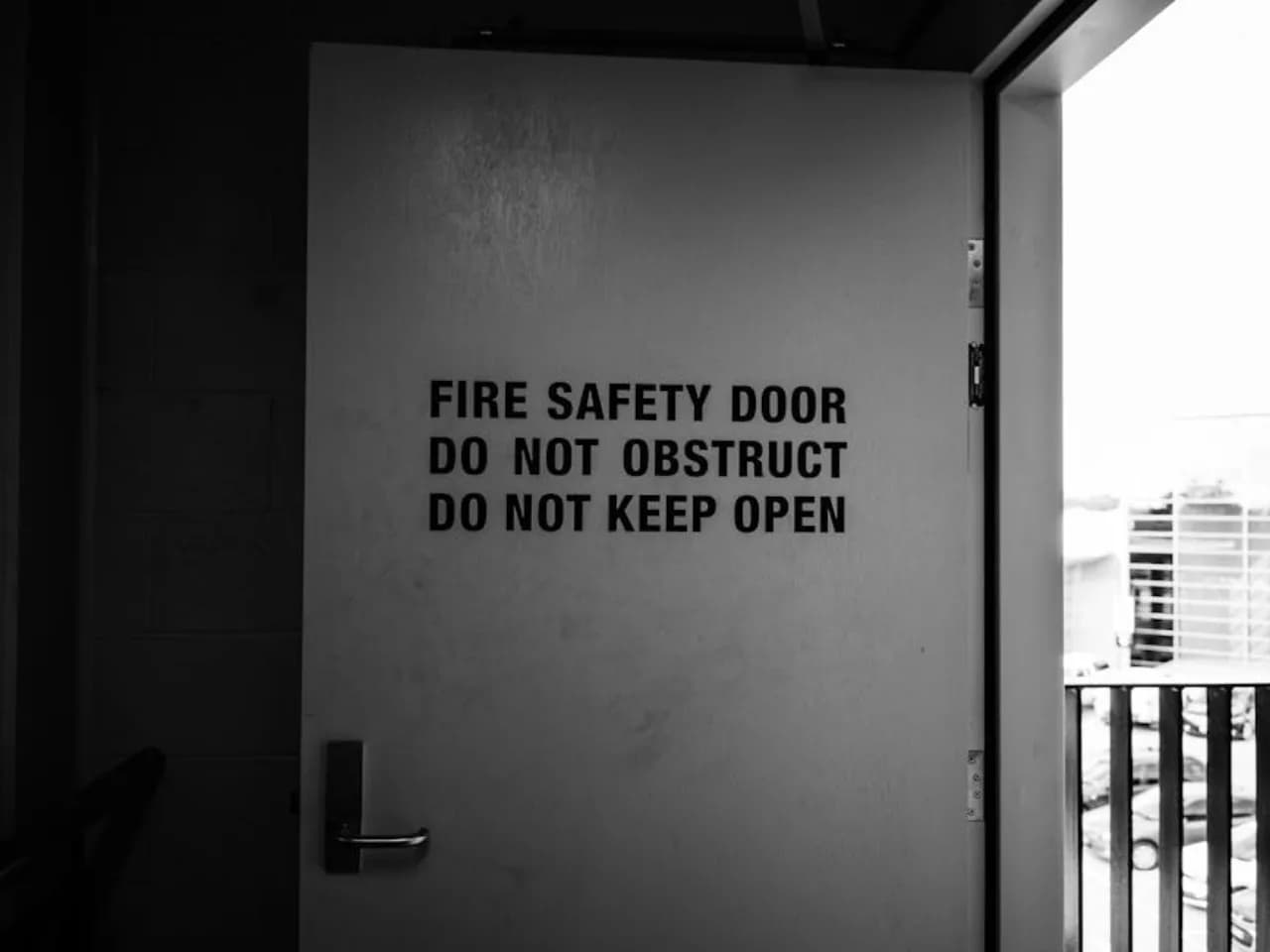
- Fire-rated rolling shutters at fire-compartment boundaries — ULC-listed, drop-test inspected annually
- Machine-guarding doors — sliding, swing, or roll-up — protecting personnel from automated cells
- Impact doors — heavy-duty PVC traffic doors for high-volume forklift transitions
- Hollow metal pedestrian doors — fire-rated and non-rated — at every personnel access
- Hot-dip galvanized doors for corrosive environments — refineries, chemical plants, agricultural processing
- Acoustic-rated doors at test cells, machining-room separations, and clean-room interfaces
- Cold-storage and freezer doors for food processing and cold-chain manufacturing
Major Canadian sectors and their door requirements
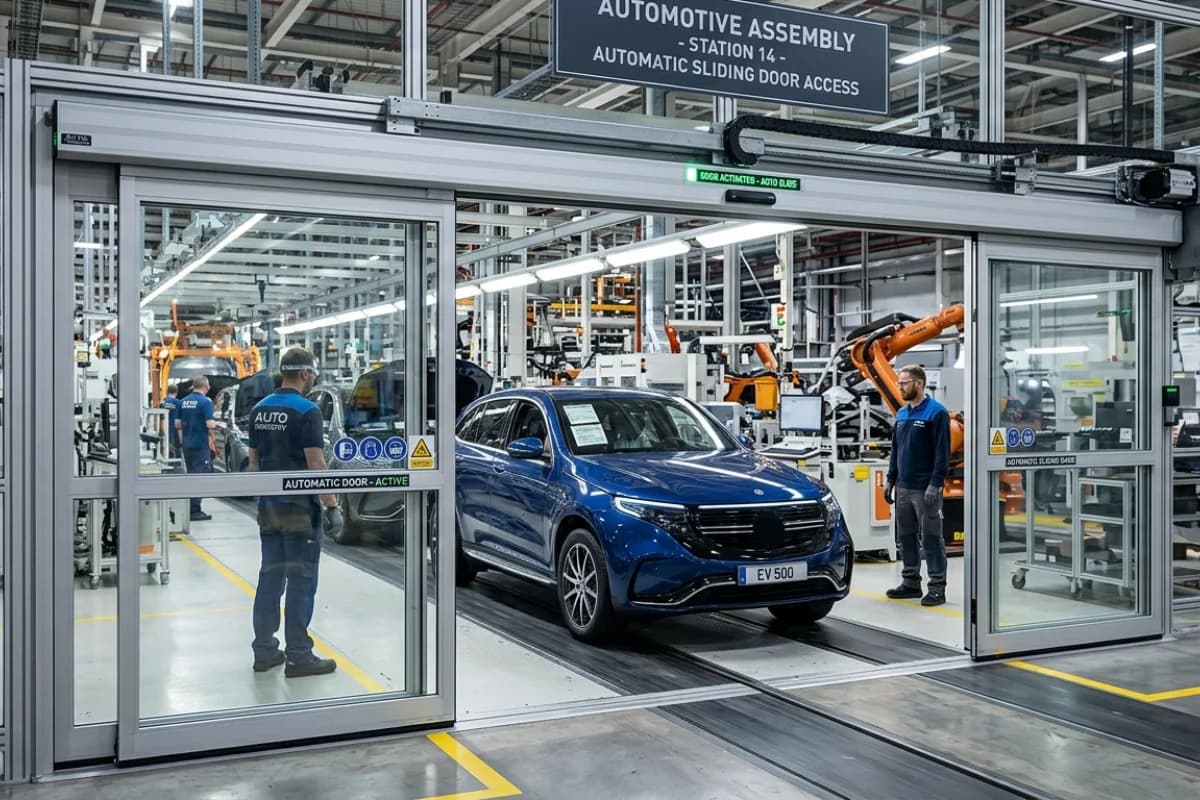
Automotive (Windsor, Oakville, Brampton): high-cycle sectional doors at body shops, paint booth doors, machine-guarding for robotic cells. Aerospace (Montreal, Winnipeg, Mississauga): hangar-style doors, acoustic test cells, FOD-control airlocks. Food processing (Brandon, Brampton, Olymel facilities): USDA-grade cold storage, washdown-rated doors, HACCP-compliant separations. Steel (Hamilton, Sudbury): heavy industrial doors, fire-rated separations between hot-work zones. Pulp and paper (Trois-Rivières, Thunder Bay): hot-dip galvanized for chemical exposure, oversized doors for raw-material handling.